What should change, what must remain, and how far can you go?
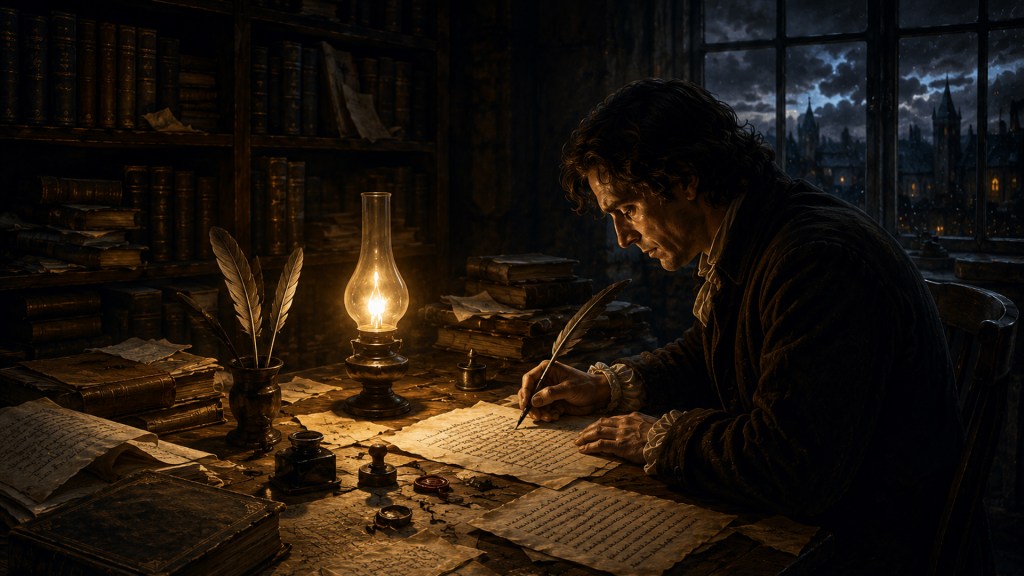
Every time a classic is modernized, someone asks the same question: Why? If a book has lasted for centuries, shouldn’t we leave it alone?
Fair point. A classic has earned its place because of the story it tells, the memorable characters it brings to life, or the ideas worth preserving. We should not alter those things simply to suit modern tastes. But language moves on. Words change, expressions fall out of use, and sentence structures that once felt natural can become obstacles for modern readers. A book may still be important while becoming too difficult to read.
That is the reason to modernize it: not because the book has lost its value, but because the language may have begun to stand between the original work and the reader.
A POWERFUL NOVEL
When I first read Temno by the Czech writer Alois Jirásek, I found a remarkable and powerful novel. The story, the characters, the atmosphere, the historical conflict, and the emotional weight of the choices the characters faced had lost none of their force. It was the English translation, rather than the novel itself, that had become difficult for modern readers.
I wanted readers to experience the same story, the same characters, and the same historical world without having to struggle constantly with language that no longer felt natural. That became the guiding principle behind Darkness: to help today’s readers reach the original work more easily while remaining faithful to Jirásek’s story and the world he created.
WHAT DOES MODERNIZING MEAN?
Modernization works within the existing novel. It updates the language, clarifies difficult passages, and may reduce repetition or digressions that obstruct the story, while preserving the book’s essential form.
An adaptation has greater freedom. It may move the story to another period, change characters or events, or reshape the plot for a different audience or medium. A rewrite goes further, using the original as the basis for a substantially new work.
A modernized version should remain the same book. Readers encounter clearer language and a more natural reading experience, but the story, characters, historical setting, and central concerns still belong to the original author.
SO WHAT SHOULD CHANGE?
What should actually change is anything that prevents readers from reaching the book clearly: outdated wording, clumsy or overcomplicated sentences, unnecessary repetition, and passages that slow the story without adding meaning.
In Darkness, this included shortening full Bible quotations, reducing extended references to obscure books or historical figures, and clarifying names, titles, customs, or events that now require explanation. When a reference still mattered, I kept it and explained it rather than simply removing it.
The test is simple. Does the passage deepen the reader’s understanding, or does it merely make the book harder to get through?
WHAT SHOULD STAY UNTOUCHED?
The historical world of the novel must stay intact: its setting, customs, social order, religious beliefs, and moral conflicts. Characters should not be given modern attitudes simply to make them more familiar or likable, nor should they speak in contemporary slang or fashionable everyday language that does not belong to their time. The prose may become more accessible, but the people themselves must remain recognizably of their own age.
The main story, the relationships between the characters, and the consequences of their choices must remain as well. These are the substance of the book.
HOW FAR CAN YOU GO?
There is no fixed percentage at which a novel suddenly becomes a different work. The boundary depends on what has been changed and why.
Clarification helps the reader reach the original meaning. Alteration replaces that meaning with something new. Abridgment can strengthen a book by removing repetition, digression, or material that no longer serves the story, but it begins to distort the work when it changes the balance of the plot, weakens a character, removes an important conflict, or shifts the author’s emphasis.
IS IT STILL THE SAME STORY?
In the end, the question is whether the reader is still experiencing the same story, shaped by the same characters, tensions, and ideas. Once those begin to belong more to the editor than to the original author, the book has crossed from modernization into rewriting.
In working on Darkness, I tried to preserve everything that gave the novel its force while removing the barriers created by outdated language, repetition, and difficult translation choices. My aim was to make the book easier to enter without weakening its historical world or reducing the emotional and moral pressure at the heart of the story.
A classic survives because every generation finds something worth discovering in it. If modernizing the language allows today’s readers to make that discovery for themselves, then it has done its job.
A successful modernization should never replace the original. It should simply open the door.


